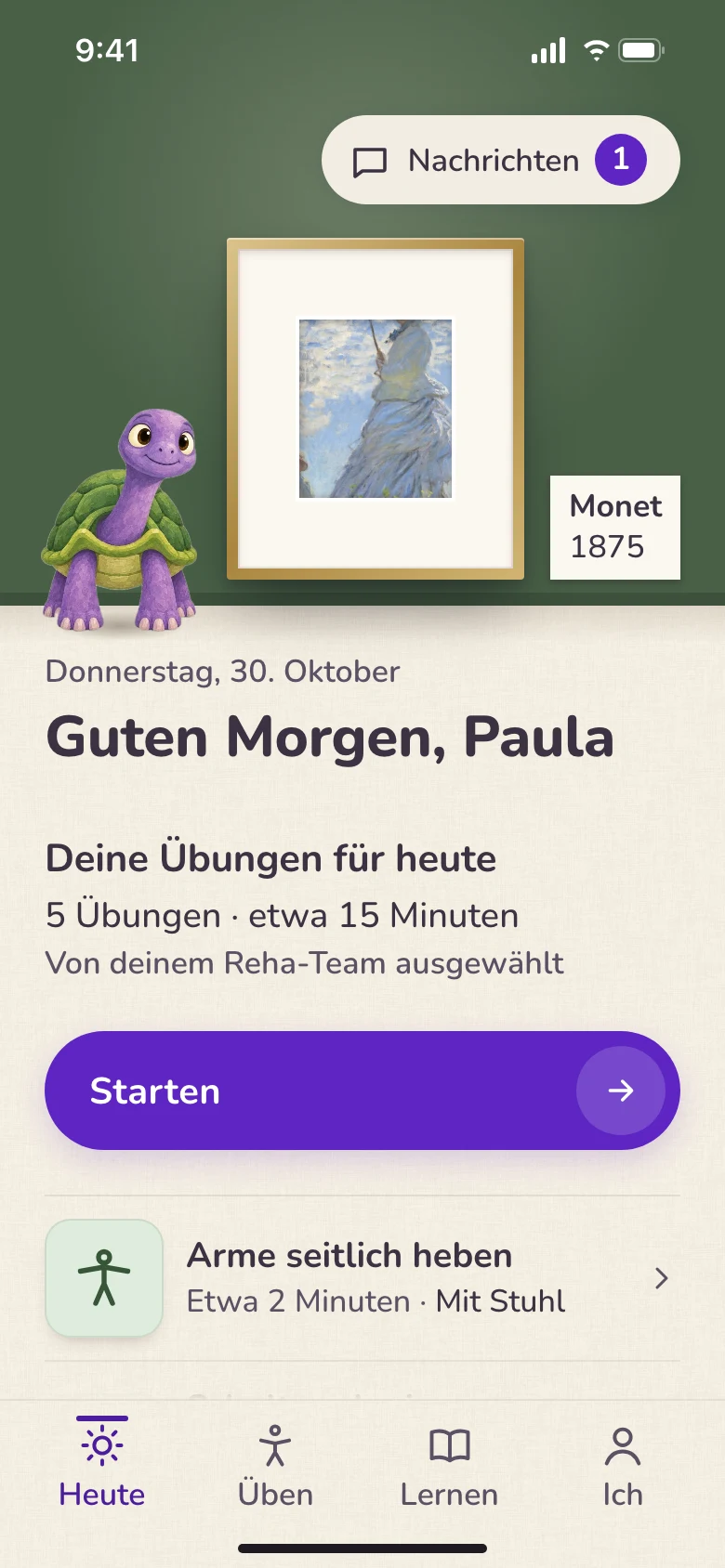

An example week, four weeks after discharge.
Paula Meier is back home after a stroke. Lea Brunner is her physiotherapist, Andrea her daughter. All three are invented.
On Monday, Lea puts the programme together.
In the dashboard she sets up what Paula should practise at home this week. Every view has its counterpart in the app.


In the dashboard: Modules, exercises, podcasts, books and articles in one place, organised by area.
In the dashboard: A module consists of sections with their exercises. Once it is switched on, it appears in the app. The library is the same for all clinics.
In the dashboard: If an exercise is missing, the team creates it: with video, audio, timer or repetitions, with instructions and safety notes.
In the dashboard: On Paula’s page, Lea puts the programme together and gives each exercise a priority.
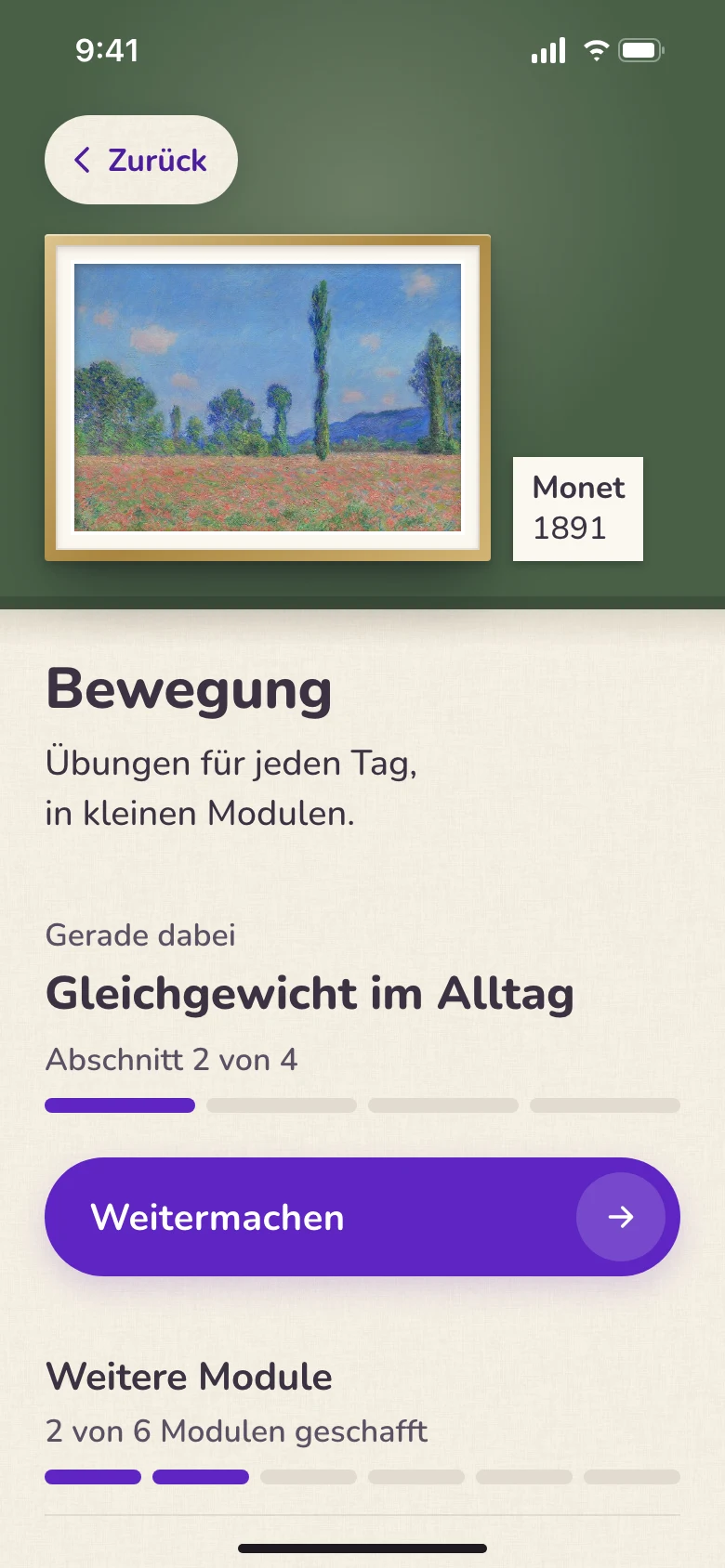
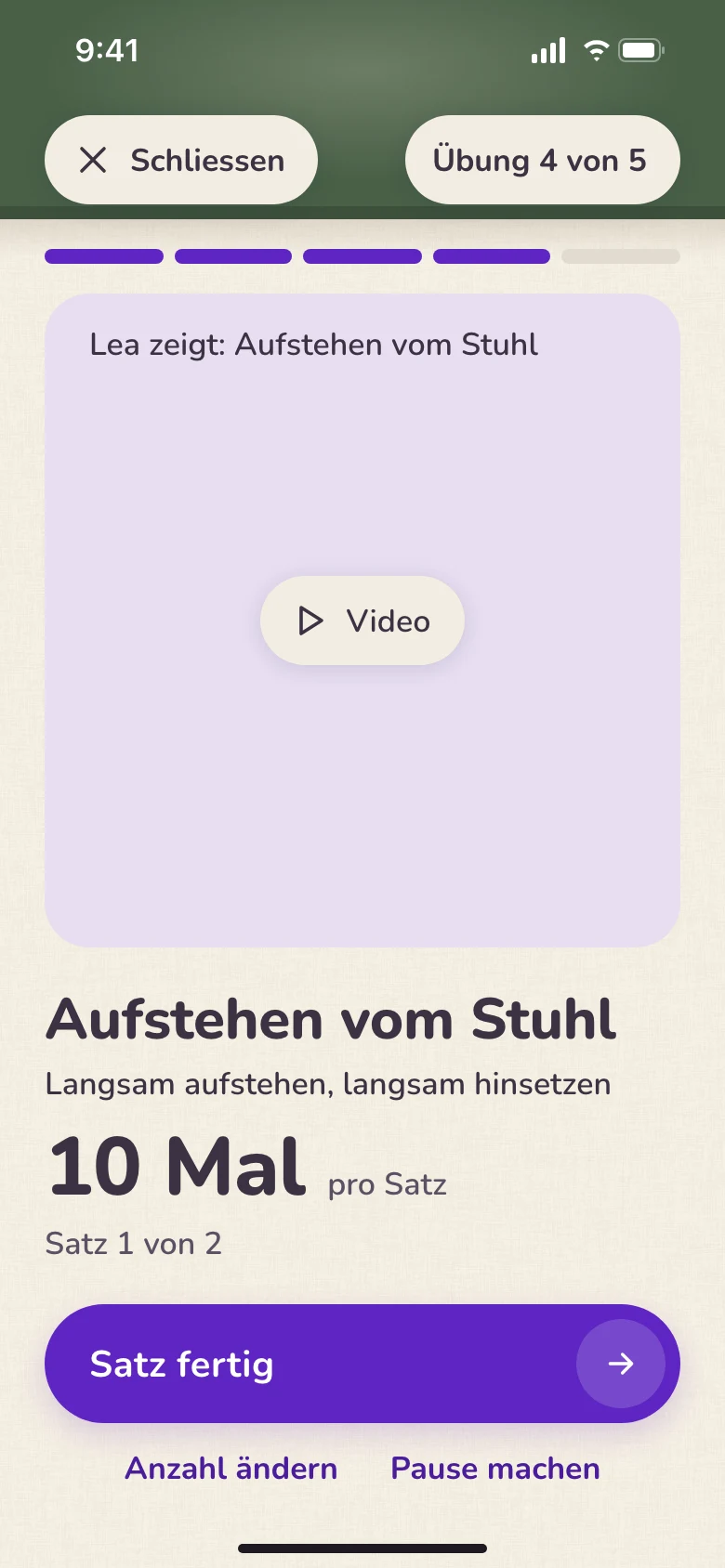
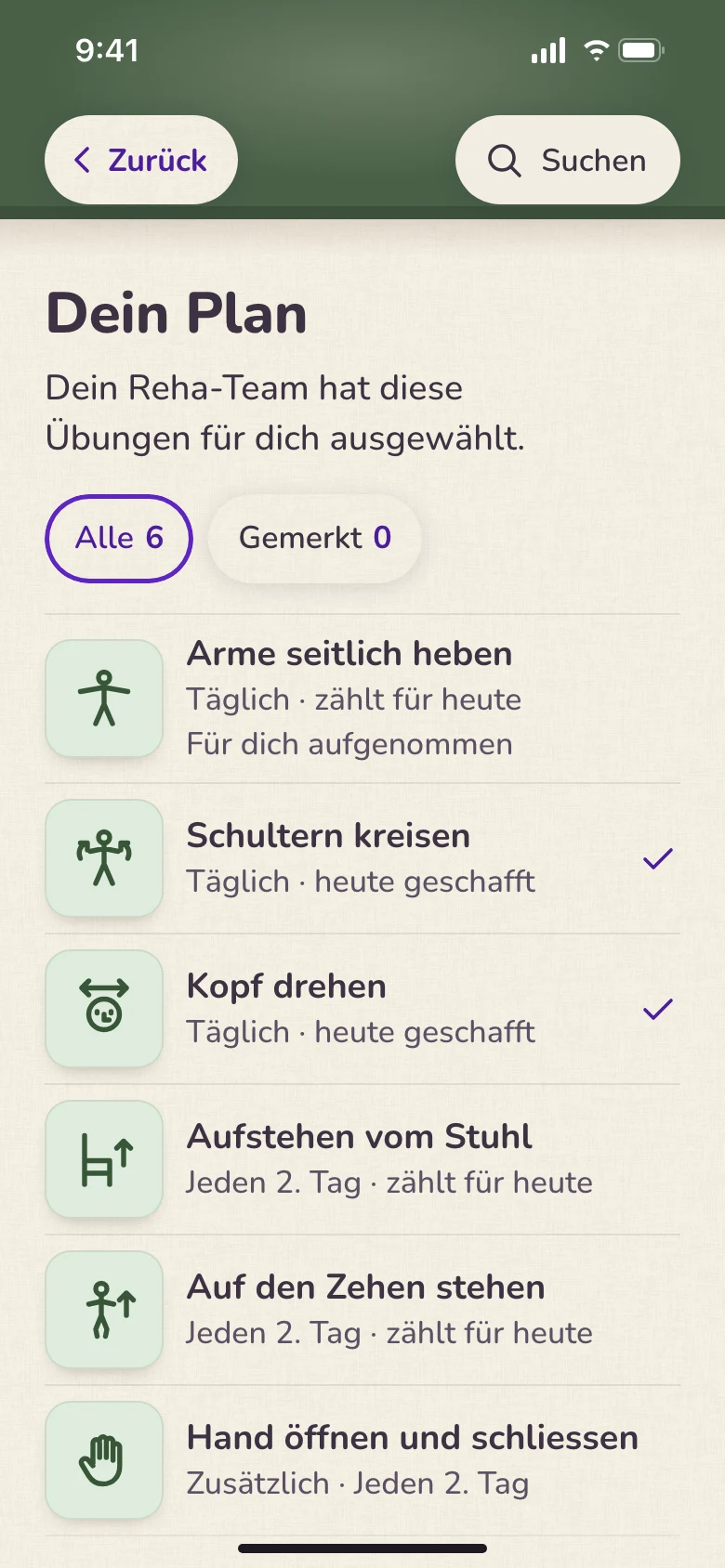
In the app: the modules of an area, with your own progress.
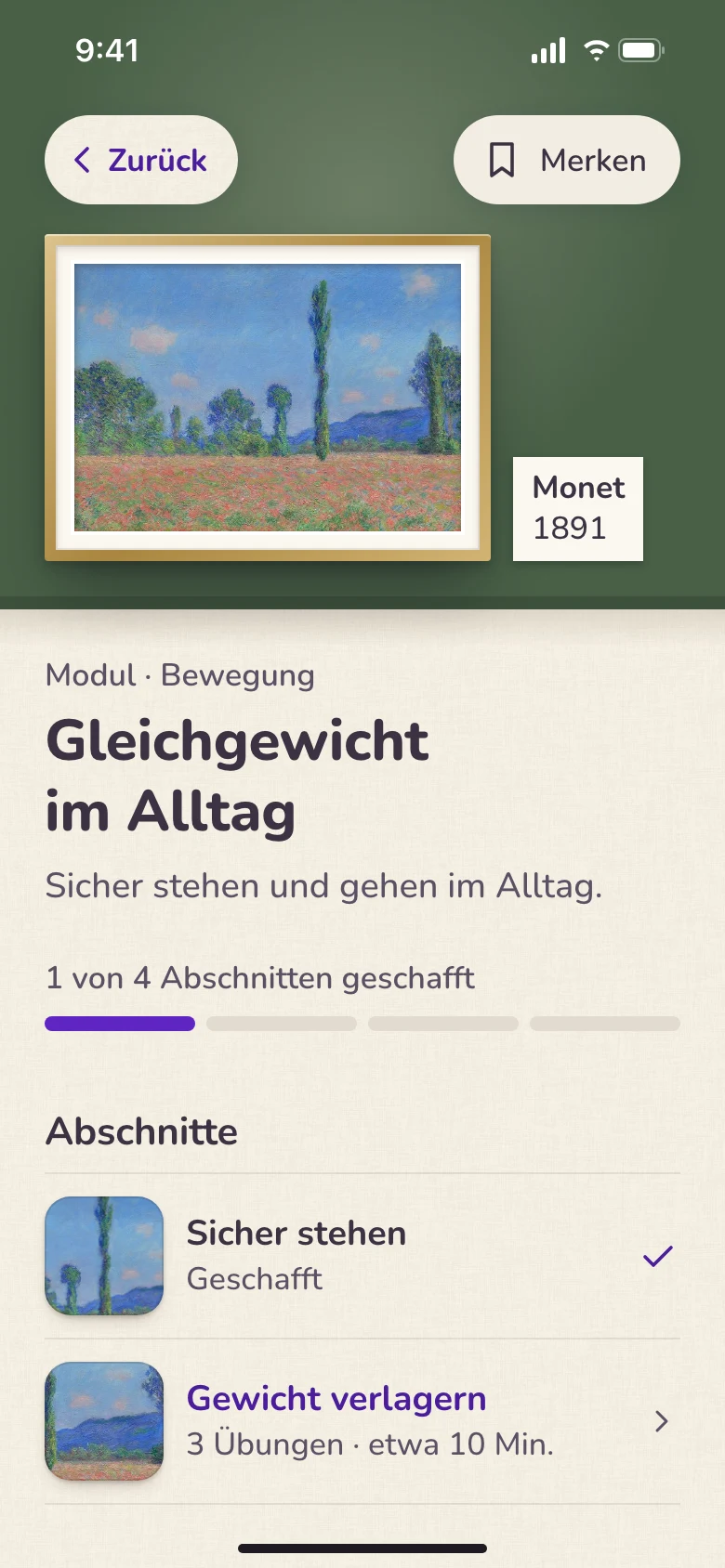
In the app: the module with its sections, and how far Paula has got.
In the app: the exercise, just as the team created it.
In the app: What the team has selected comes first in Paula’s daily programme.
On Tuesday, Paula practises at home.
What Lea selected comes first. A video shows the movement, a timer guides through the round, and after each exercise Paula says how it went. In the dashboard, the team sees who has already practised today.
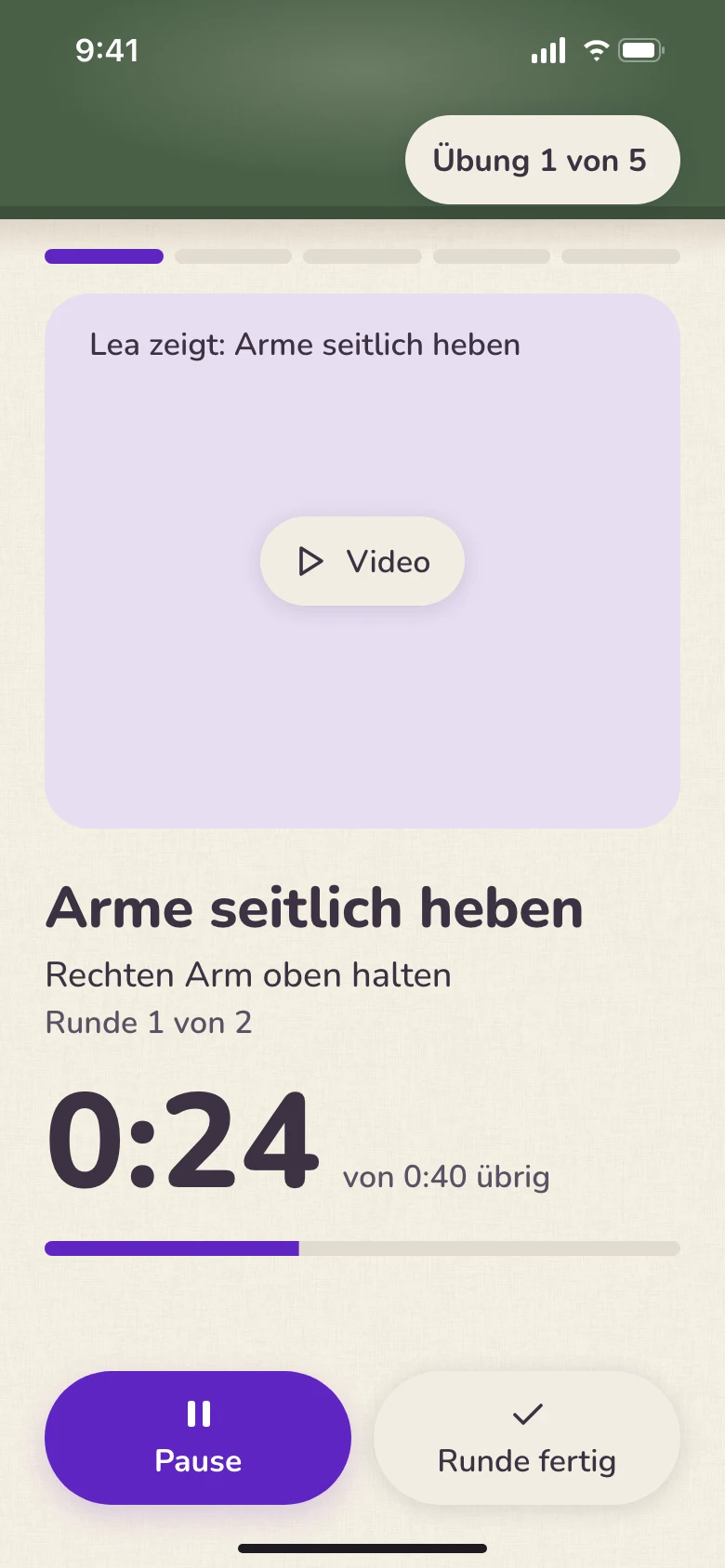

At home, in the morning: an exercise with a timer. In the clinic: Paula’s row on the team’s start page.
Claude MonetThe Artist’s House at Argenteuil, 1873
On Wednesday, the questions come.
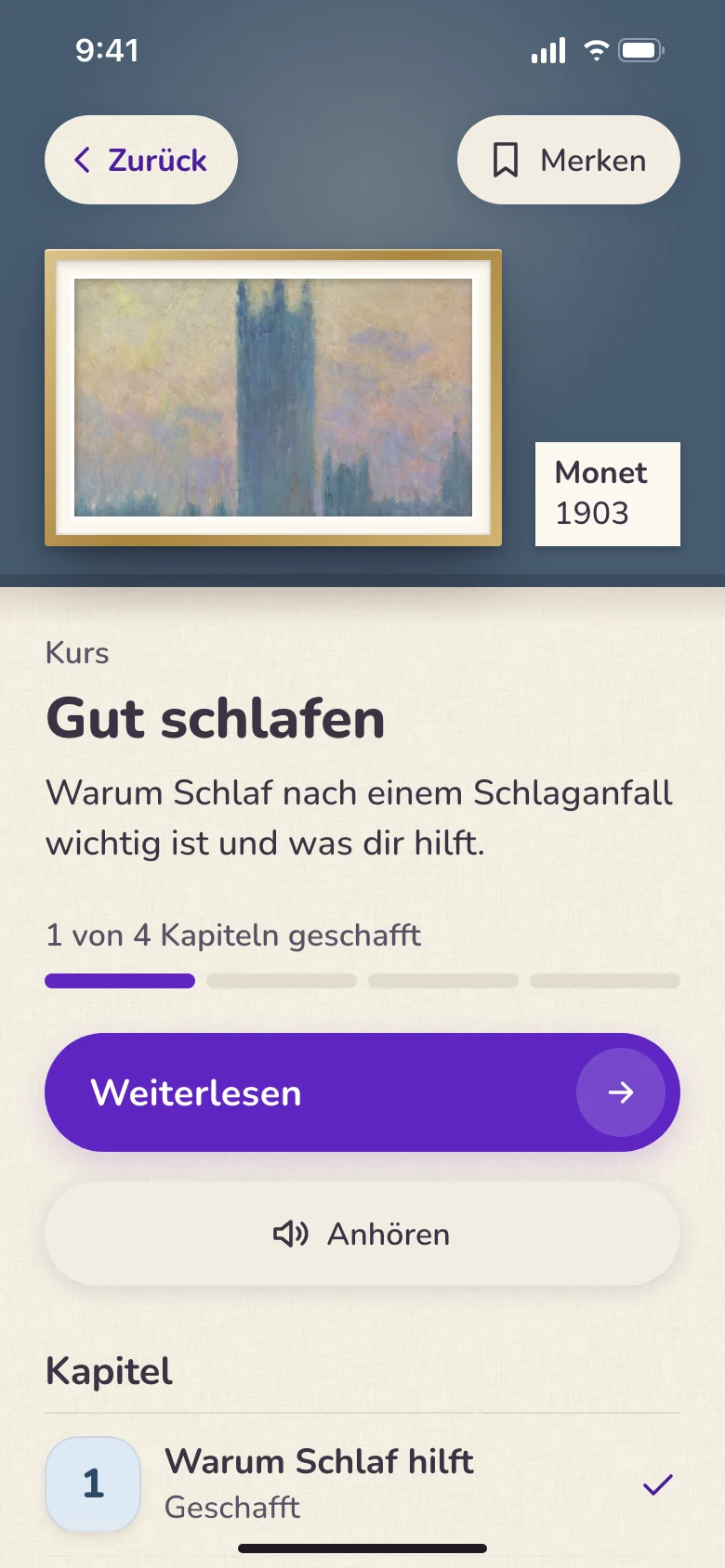
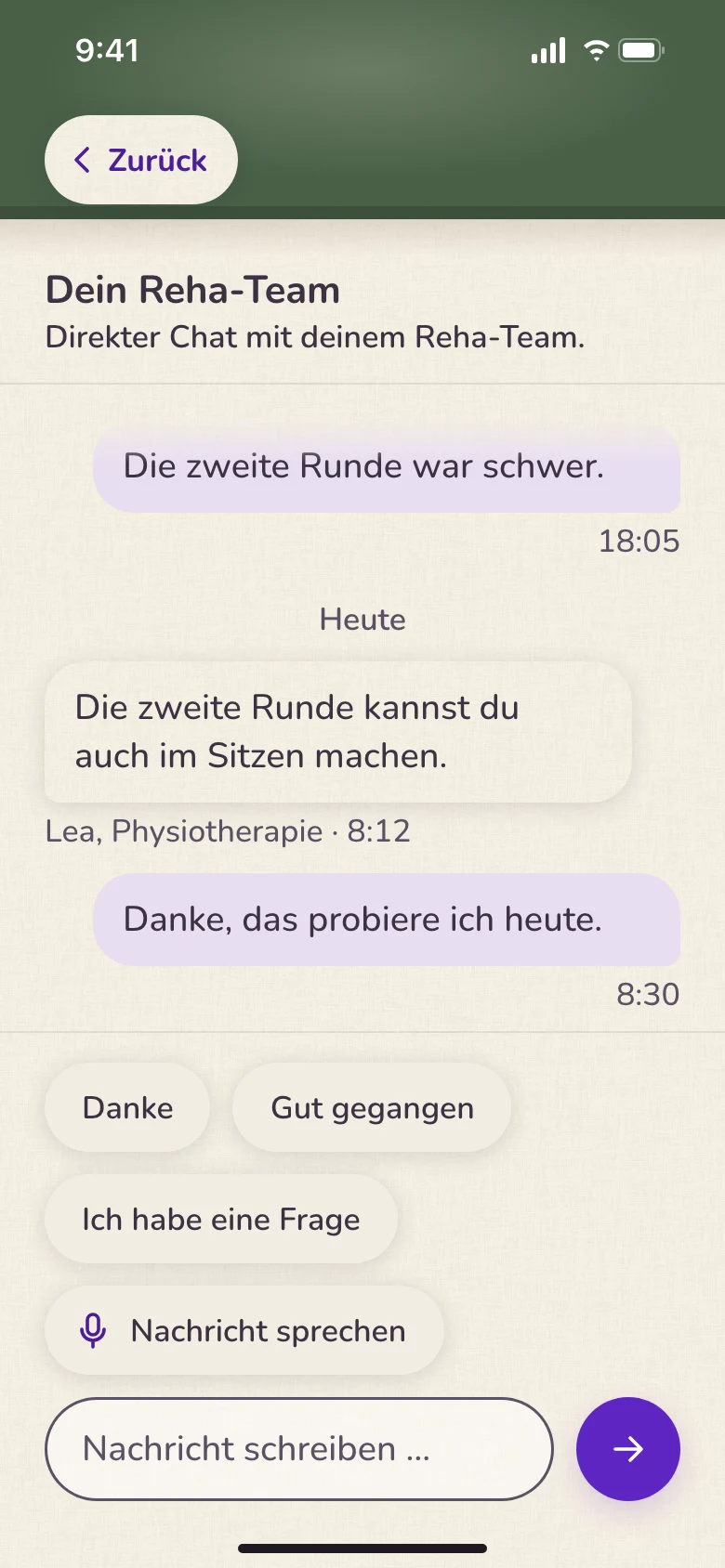
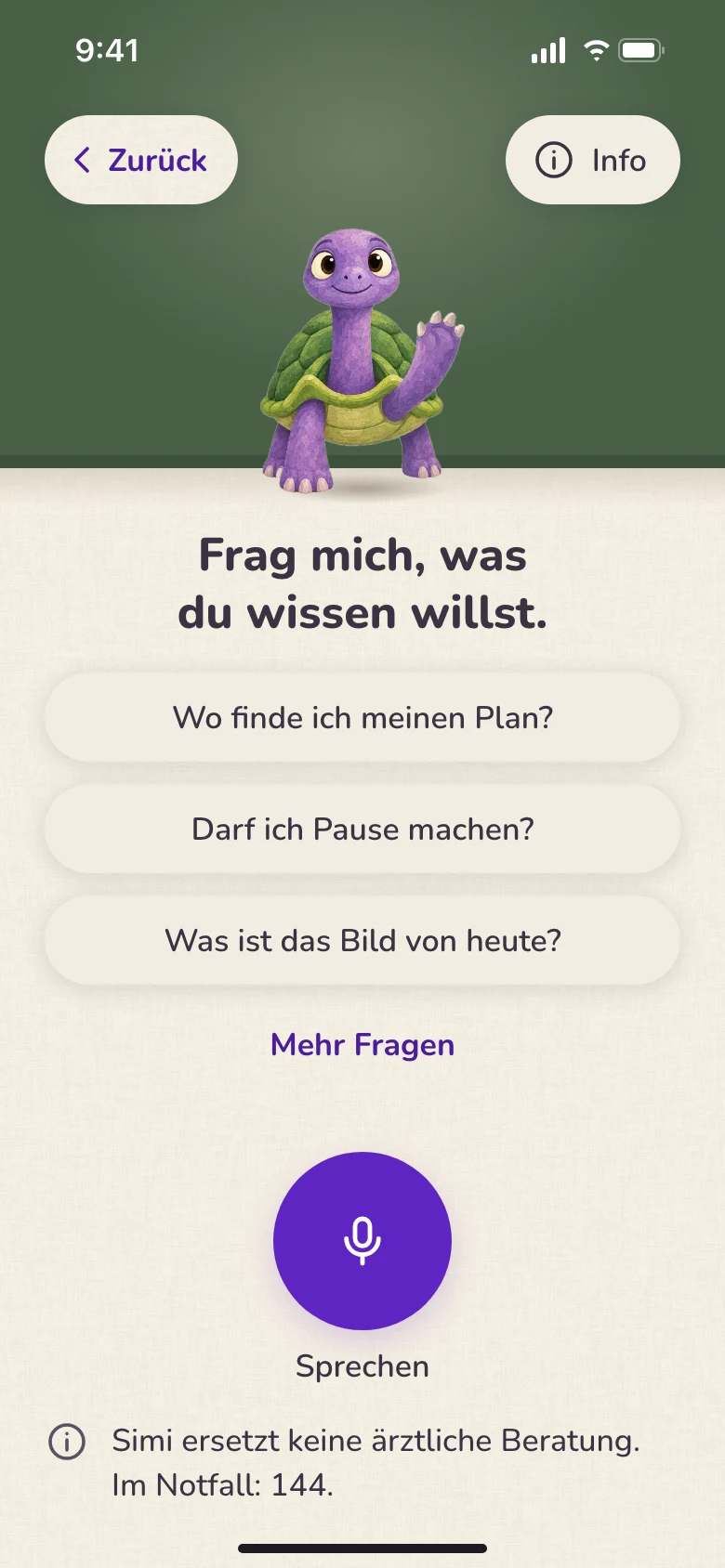
At home, questions arise that did not exist in hospital. The app answers many of them with courses, guides and podcasts. Some go to the team. For the rest there is Simi, an experimental AI assistant that gives no medical advice.
A course in four chapters, here about sleep after a stroke.
A message to the rehab team. The reply comes from Lea.
Paula talks to Simi by voice. Simi gives no medical advice.
On Thursday, her daughter learns along.
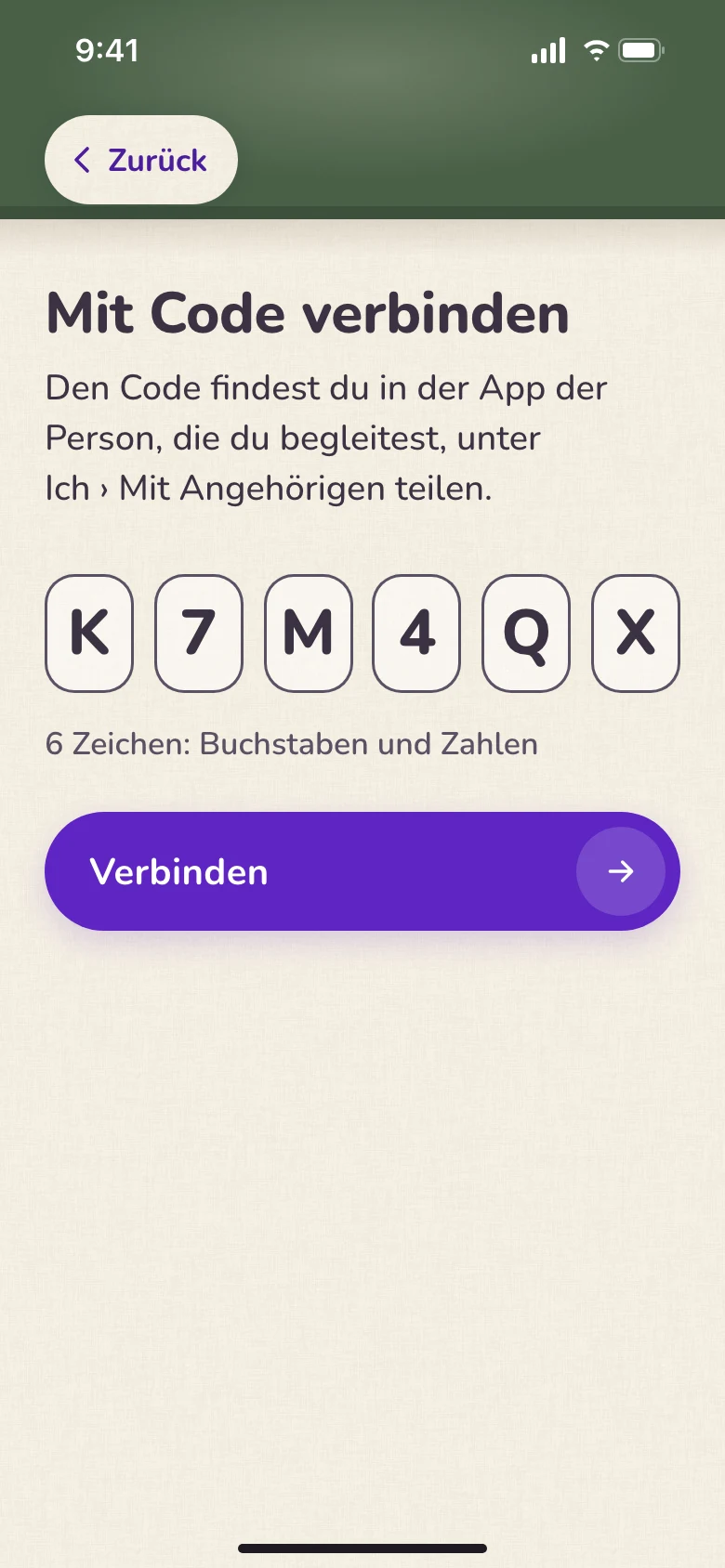
Andrea connected with a code from Paula’s profile: she registered as a relative and entered it. Since then she reads and listens along in the app: courses, guides and podcasts. She does not see Paula’s exercises or her progress today.

Claude MonetThe Artist’s Garden at Vétheuil, 1881
On Friday, Lea looks at the week and adjusts the programme.
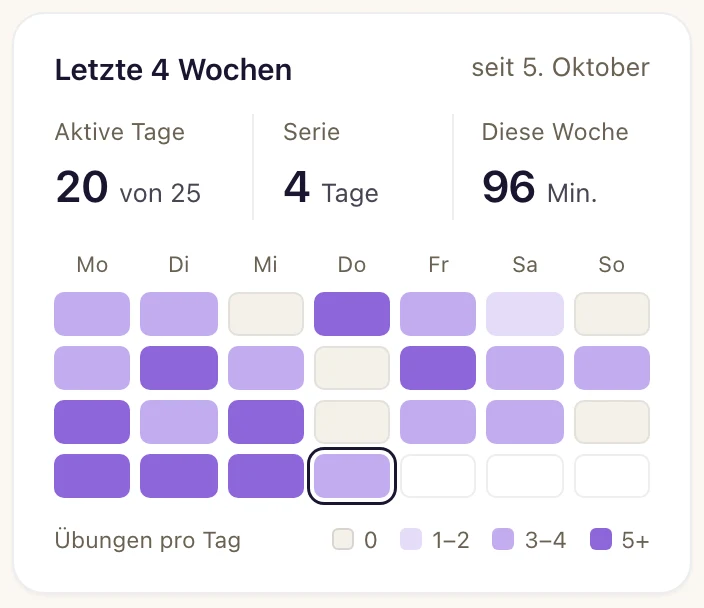
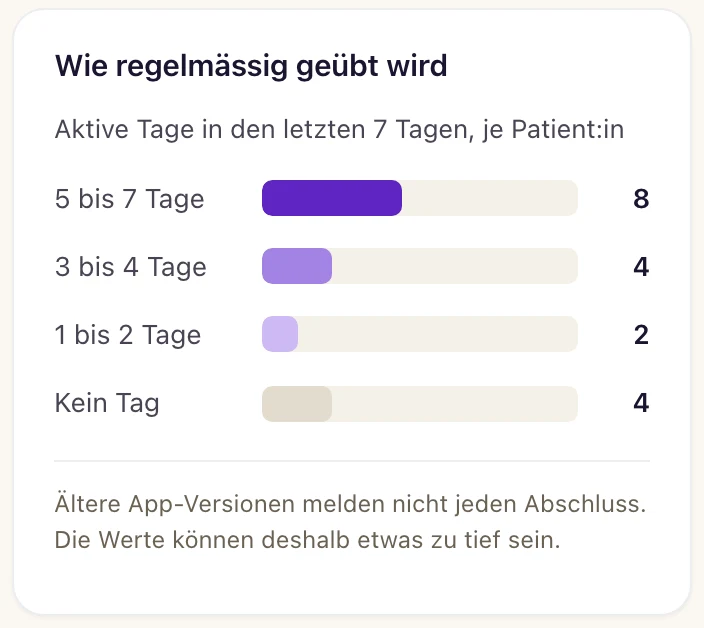
“Heute” first shows who needs attention, with the reason in words. On Paula’s page, Lea sees active days, streak and minutes, moves one exercise up and adds a new one. On Monday the next week begins.

Health data only with consent.
Before the app processes health data, people affected and relatives give explicit consent. They can withdraw it at any time in the settings.
| People affected | Relatives | Rehab team | Via Communa | |
|---|---|---|---|---|
| Exercises and progress | yes | no | yes | yes |
| Messages to the team | yes | no | yes | yes |
| Checklist and agenda | stay on the phone | |||
As of October 2026, as access is set up in the database. Rehab team: therapists and admins of the person’s own institution. Via Communa: the platform’s administrators.
A Swiss company
ViaCommuna is made by Via Communa GmbH in St. Gallen. Our privacy policy follows the Swiss Federal Act on Data Protection and the GDPR.
Database in Zürich
ViaCommuna’s data is kept encrypted in our hosting provider’s database, region Zürich. Which other service providers process data is set out in the privacy policy.
ISO 27001: certification under way
Our information security management is going through ISO 27001 certification. We expect to complete it in January 2027.
Deleted whenever you want
People affected and relatives delete their account themselves, in the app or on our website. Deletion is immediate.
Complements therapy
ViaCommuna is not a certified medical device and does not replace medical advice.
What people ask us first.
Is your question missing? Write to us at info@viacommuna.com.
How do people affected get the app?
Through the clinic: the team registers them in the dashboard, and they receive an invitation with their code.
What does ViaCommuna cost?
ViaCommuna is free for people affected and their relatives. Healthcare institutions receive an individual offer, depending on their size and the number of patients. Health insurers do not reimburse ViaCommuna today.
Does ViaCommuna replace therapy?
No. ViaCommuna complements professional care between therapy sessions and helps to reinforce what has been learned.
On which devices, in which language?
The app runs on iPhone and Android, in German and English. The dashboard runs in the browser.
Can data be deleted?
Yes. An e-mail to privacy@viacommuna.com is enough; we delete within 30 days.
Does ViaCommuna look today the way it does on this page?
No. The images show the new design of app and dashboard that we are working on. In the demo you will see how it stands today.

Get to know ViaCommuna in a demo.
We will get back to you within two working days. We will answer questions about privacy and costs right away.
Affected yourself, or supporting someone? For people affected and relatives→
Claude MonetPalazzo da Mula, Venice, 1908
How a clinic begins
- Demo. We show the app and the dashboard, on site or by video.
- Set-up. We set up your institution and train the team.
- Pilot. You start with the first patients, and we support you.